Showing posts with label allergies. Show all posts

Thursday, 1 March 2012

Myth and fact in the gluten debate


Gluten-free is a big buzzword with big bucks behind it. In 2010, the global market for gluten-free products was worth $2.5 billion. Over the next five years, it is expected to grow to more than $5 billion.

But, how much of the buzz behind being gluten-free is bona fide?

A new study raises questions about the hype surrounding the gluten-free phenomenon. According to the study published in the Annals of Internal Medicine, titled Nonceliac Gluten Sensitivity: Sense or Sensibility?, there are 4598 Google citations of noncoeliac gluten sensitivity for every science journal article about the condition.

"Considerable debate about noncoeliac gluten sensitivity has recently surfaced on the internet, with a sharp increase in forums, patients or patient groups, manufacturers, and physicians advocating a gluten-free diet," the study's authors said. "Claims seem to increase daily, with no adequate scientific support to back them up."

The researchers acknowledge that "recent studies support the existence of a new condition, noncoeliac gluten sensitivity", but say gluten may not be the problem in a lot of the sensitivity that patients feel.
Gluten is found in products that contain wheat, rye and barley. In the study, the researchers noted that other ingredients in wheat flour or wheat-based foods may actually be causing symptoms that might be attributed to gluten sensitivity.

Yet, another study was specifically designed to establish whether gluten or fructans, which are another component in wheat, was the culprit. In the study, subjects were given bread and muffins that were low in starch. One batch of the bread and muffins contained gluten, the other did not.
The study found that gluten itself may trigger gut symptoms and fatigue in individuals who do not have coeliac disease.

"There was a clear difference in symptoms [between those who had the muffins with gluten and those who didn't]," says co-author of the study and Director of Medicine at the Angliss Hospital in Melbourne, Dr Evan Newnham. "There's a perception that [gluten-free] is a fad and that gluten is an evil food. But trials [like these] establish that it might be a clinical and medical problem."

Indeed, an essay published in the BioMed Central Journal says that gluten is "toxic" to humans and predicts that gluten-related problems are set to rise.

Since the introduction of grains containing gluten to the human diet about 10,000 years ago, selective breeding has seen the gluten content of wheat rise considerably to make it more palatable. The offshoot of this is that it is more harmful to humans. "Wheat varieties grown for thousands of years and mostly used for human nutrition up to the middle ages ... contain less quantities of the highly toxic 33-mer gluten peptide."

The authors say that our gastrointestinal and immunological responses have not adapted and so we remain "largely vulnerable to the toxic effects of this protein complex ... All individuals, even those with a low degree risk, are therefore susceptible to some form of gluten reaction during their life span."

But, because it is only in the last decade that coeliac disease and gluten sensitivities (for which doctors cannot test) have moved into the spotlight the research is still in its infancy. Which makes the distinction between how much is fact or fad a challenging call to make.

And it is not just the medical professionals debating the issue.

Mia Freedman recently expressed her exasperation in a post titled: "Does anyone eat anything anymore?". In the blog, she quotes nutritionist, Joanna McMillan.

"Some people cannot tolerate gluten yet suddenly everyone thinks gluten is bad. The truth is: it is modern refined foods that are causing most of our health problems. Not the individual components of food. We're missing the point."

"It never used to be like this," Freedman says. "Nobody had an intolerance when I was a kid, let alone wanted one."

In response, blogger and author, Sarah Wilson wrote an article titled "What's with all the gluten intolerances?? let me explain..."

"The short form: gluten is a poison," she says. "We tolerate it, and tolerate it, like cigarettes in the lungs. And then. One day. It's too much. Things tip over and BANG we have lung cancer. Or gluten intolerance. Or coeliac's disease."

Wilson also points out that we eat more wheat than ever before and cites the Pottinger cats theory as a possible explanation for the growth of gluten-related problems.

Over a period of ten years, Pottinger conducted a series of diet experiements on cats. "He found the illnesses (including infertility and the same degenerative diseases we're now seeing in humans) took several generations to kick in. And that it took four generations again of being fed good food for normal health to be restored," Wilson said.

"The point being...intolerances haven't just suddenly happened now. They've built up and accumulated over the generations. Our grandparents started eating processed, high-wheat and gluten diets. Now we're copping it."

There is something to this, says Newnham. "Environment, awareness...genes and how [previous generations] have eaten all have a role," he says. "The difficulty is to tease it all out."

Teasing out is exactly what the medical profession is now attempting to do. "While [gluten sensitivities] are anecdotally common, the medical community has been slow on the uptake," Newnham says. "On the whole we do tolerate [gluten], but it's increasingly recognised that there is a subset of the population that doesn't. What we don't know is the prevalence...[it] still needs more research"

If you do believe gluten is causing you problems, Newnham does not see a problem with going gluten-free provided it is done under the supervision of a dietitian or doctor. "But, I'd just like to emphasise that before embarking on a gluten-free diet ensure you don't have coeliac disease. Complications can ensue [if you do] and you can find out with a simple blood test or endoscopy."

What's the difference:

Coeliac disease (CD) is an autoimmune enteropathy triggered by the ingestion of gluten. Gluten-sensitive individuals (GS) cannot tolerate gluten and may develop gastrointestinal symptoms similar to those in CD, but the overall clinical picture is generally less severe.

Gluten sensitivity refers to an adverse reaction to eating gluten that usually does not lead to damage of the small intestine.

Wheat allergy is not specifically related to the gut. Reactions to wheat can vary significantly and like other classic food allergies can affect the skin, gastrointenstinal tract or respiratory tract.

Coeliac denotes a response to gluten that causes the immune system to attack its own body tissue


Thursday, 23 February 2012

Healthy Shelf Newsletter - Summer 2011 Edition

Please note the links on these images are not clickable.  Only past newsletters are made available on this blog for reference purposes.  To receive the current edition each quarter please email your request to mail@healthyshelf.com.au.


Friday, 4 November 2011

Healthy Shelf Newsletter - Spring 2011 Edition

Please note the links on these images are not clickable.   CLICK HERE to access and download the original PDF of the Healthy Shelf Newsletter - Spring 2011 Edition.


Only past newsletters are made available on this blog for reference purposes.  To receive the current edition each quarter email your request to mail@healthyshelf.com.au.

Study to crack egg allergy - News article

Source: The West Australian | Date: 2009-10-07

Doctors are testing a theory that the most common food allergy in children could be prevented by feeding egg to babies by the age of six months.

In a move that goes against recent advice to delay giving babies potentially allergy-causing foods, researchers from Princess Margaret Hospital's Childhood Allergy and Immunology Research centre believe exposure to egg early in life could help develop immune tolerance.

They are recruiting 125 babies with eczema who are at higher risk of developing food allergies, half of whom will be given egg powder each day while continuing their regular feeding. The rest will be given a non-egg substitute.

Susan Prescott, from the University of WA's school of paediatrics and child health, said allergy to egg was the most common susceptibility in Australian children.

There was no treatment for the condition and avoiding the food often put a burden on families.

"We think the immune system probably learns these foods are harmless by being exposed to them regularly from an early age," Professor Prescott said.

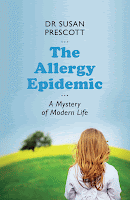
Find Dr Susan Prescott's book "The Allergy Epidemic - A Mystery of Modern Life" on  your Healthy Shelf today. 

The serious full-body impact of allergies - News article


The true burden of hayfever is well known to those who fall victim to it each spring.

But it has long been trivialised as merely inconvenient by the 60 per cent or so of the population who escape this allergic reaction that is not just confined to the nose, but can also cause widespread irritation in airways and spread inflammatory products around the entire body via the bloodstream.

Too often it is not taken seriously, says WA paediatric allergist and immunologist Professor Susan Prescott.

Hayfever, medically known as allergic rhinitis, affects people in various ways, ranging from only mild with occasional symptoms to being a source of long-standing and major discomfort with the ability to significantly interfere with quality of life, productivity and performance at work or school.

Some sufferers may even be mislabelled with other conditions or end up with increased dental problems caused by constantly breathing through the mouth.

"When nasal blockage is significant, it can lead to obstructed breathing during sleep," Professor Prescott says.

"Periods of reduced oxygen supply can lead to chronic tiredness and problems concentrating during the day. In children, it can affect school performance, behaviour and attention span and can lead to mislabelling with 'attention deficit disorder'.

"Chronic allergic rhinitis can also be associated with other local problems such as ear infection, hearing problems, sinus infection, nasal polyps and even dental problems due to chronic mouth breathing."

Now there is emerging evidence that allergic rhinitis, often linked to lower airway inflammation and asthma, may be associated with other, more generalised effects of systemic inflammation, reports Professor Prescott in her new book The Allergy Epidemic - A Mystery of Modern Life.

"Although inflammation is most obvious in the nose or the chest, there is growing evidence that allergic rhinitis and asthma may have effects much further a field," she writes in the book.

"One of my Canadian collaborators has elegantly demonstrated that inflammatory products ,including cytokines and other mediators, released from the airways during an allergen challenge circulate through the blood to stimulate immature cells in the bone marrow. This leads to the release of showers of new inflammatory cells that enter the blood stream and come back to sites of inflammation, adding fuel to the fire.

"It is possible, but not confirmed, that this also contributes to inflammation in blood vessels and increased risk of cardiovascular disease.

"In support of this idea, higher rates of heart disease have been associated with allergy in both animal and human studies. Interestingly, treatment of airways inflammation, with inhaled steroids, has also been shown to reduce the risk of heart disease.

"This highlights the potential for events at a local site to fuel inflammation in other parts of the body, but more research is needed to determine the significance of this."
Already hayfever is considered to be a major contributor to Australia's estimated financial cost of allergies which was $7.8 billion in 2007.

Find Dr Susan Prescott's book "The Allergy Epidemic - A Mystery of Modern Life" on  your Healthy Shelf today. 

Hayfever misery well known to expert - News article


Can't breathe? Can't sleep? Can't concentrate? Headaches? Always tired? Itching? Sneezing? Snoring? Nose running? Dark rings under the eyes? Bad breath? Dry mouth? Embarrassed and self-conscious? Bad behaviour and learning difficulties?

One of the many who have fallen victim to these chronic hayfever symptoms, and had to battle on regardless, is WA's paediatric allergist and immunologist Susan Prescott.

In her new book, The Allergy Epidemic - A Mystery of Modern Life, she describes her first memory of her "unbearable" hayfever, saying growing up in WA's Wheatbelt she was among the allergy epidemic's first big wave.

Now based at Princess Margaret Hospital and the University of WA and considered a leading expert in the field of early immune development, she also makes the warning that its debilitation, health impact and cost to the community is still greatly underestimated.

"As a child, my teachers were always telling me to close my mouth and 'stop catching flies'," she says in her book.

"But they didn't seem to understand that I could not breathe any other way. At least not in the pollen season. Or around cats. Or dust. Sometimes it was almost unbearable."

Prescott's hayfever has improved with age and advancements in medication. She still uses a steroid nasal spray during her "trouble patch" which is in spring.

Knowing first hand the impact of the allergy and having spent decades treating WA children, and leading international allergy research, Prescott's book is a bid to understand why allergy rates worldwide continue to soar.

It covers a wide range of complex issues in an easy-to-understand format.

Topics include: Why is allergic disease increasing so rapidly, especially in young infants? What are the environmental factors? What is going wrong with the immune system and can we prevent it? What are the current treatment options for allergies? What is epigenetics? Where is the research headed?

Published by UWA Publishing, it is available from this month, with all the author's proceeds going towards allergy research.

Find Dr Susan Prescott's book "The Allergy Epidemic - A Mystery of Modern Life" on  your Healthy Shelf today.

One in 10 babies have life-threatening food allergy - News article


 An epidemic of potentially life-threatening reactions is affecting a record one in 10 Australian babies, a Perth expert has warned.

Princess Margaret Hospital paediatric allergist and immunologist Susan Prescott said the recent rate, the highest ever reported in the world, included a 500 per cent increase in serious anaphylactic food allergies in pre-schoolers in the past 10 years.

She said it had led to long outpatient clinic waiting lists of babies and children with severe allergies that were rare in their parents.

Professor Prescott has written a book, The Allergy Epidemic, in which she details theories about the unprecedented rise in allergic diseases and gives advice to parents about how to manage them.

She said modern lifestyle factors were creating inflammation in the immune system and in turn more allergies and immune diseases.

People were more preoccupied with hygiene, spending more time indoors and away from sunlight, and eating less fruit, vegetable and fibre.

"We don't have all the answers, because food allergies have been the poor cousin in research, but it seems you can be allergic to almost anything these days," she said.

"The main culprits are egg, cow's milk, peanuts and seafood but it's really whatever food the immune system decides to react to and we know that the immune system is very vulnerable to modern life compared to 50 years ago."

Despite the once-held view that children outgrew food allergies, many were still affected as teenagers and adults, causing an alarming epidemic that was getting worse with each generation.

"We're seeing more and more kids not growing out of them," Professor Prescott said.

Charlotte Crainie, 2, was diagnosed with a cashew allergy a year ago, after she became violently ill after eating a dip.

Her mother Aimee said the family now had to be cautious when eating out.
 
Professor Prescott is donating proceeds from the book to allergy research.

Find Dr Susan Prescott's book "The Allergy Epidemic - A Mystery of Modern Life" on  your Healthy Shelf today.

Lifestyle trigger to allergy epidemics - News Article


The puzzling 20- to 30-year lag between the wave of hayfever that gripped the world and the recent wave of food allergies has experts questioning whether the allergy epidemic is partly driven by an "amplifying effect" across generations.

With alarming food allergies now appearing within months of birth, it suggests the factors driving this new epidemic are operating very early in development, most likely in pregnancy, says leading WA paediatric allergist and immunologist Susan Prescott.

"Every mother provides the first environment for her foetus," Professor Prescott said. "Her immune system directly influences the developing foetal immune function. It is already very clear that allergic mothers directly increase the risk of allergy in their babies, so the dramatic rise in maternal allergy is another compounding factor in the allergy epidemic.

"One question is, 'Has there been another wave of environmental changes that is driving this more recent epidemic?' Or is it that you have got a continuing modernising environment overlaying the maternal allergy itself? So it's not just mum's genetics, it's her expression of disease. If she has got a more inflammatory state, she might have a direct influence on the baby's immune system just by her being allergic."

Professor Prescott said it was almost certain that today's rising allergy to common foods such as milk and eggs, that had been consumed by humans for 1000 years, was directly because of a sudden change in our modern way of life.

It was possibly a yet-to-be- identified damaging combination of environmental factors that had emerged over the past 10 years, she said.

Environmental factors under investigation and suspected of triggering allergy-causing inflammation range from pollutants such as cigarette smoke, traffic fumes and pesticides, to a lack of sunlight, physical activity and fruit and vegetables, and a "too clean" environment.

However, researchers were also starting to wonder if it might possibly be that modern environmental changes that had affected the immune system of the hayfever-prone mother were then further altering the immune gene expression in her developing foetus.

Beginning research into this area, some researchers suspected this "amplifying effect" might be partly the reason why today's alarming food allergy wave was far more severe, seeing babies showing signs of allergic disease within a few weeks of birth and those under one-year-old having life-threatening anaphylactic reactions.

Australia has one of the highest allergy rates in the world. Ten per cent of one-year-olds now have a food allergy and in the past decade there has been a five-fold rise in anaphylactic food allergies in preschoolers.

When this younger generation reaches adulthood, the burden of allergic diseases is expected to increase even more. They are at greater risk of developing hayfever and other allergies.

"The problems we are seeing today, they just did not exist like this in the past," Professor Prescott said.

"We see allergic disease much younger in babies and more severe. We are seeing more cases of anaphylaxis in the under one-year-olds from food. And on top of that, we are seeing that they are less likely to grow out of it than they used to be.

"It is all really adding up to an enormous and growing burden. And we do not know what is in store for this generation as they grow up.

"At this stage, we cannot explain the secondary rise in food allergy and why this has been delayed so long after the asthma and hayfever epidemic. One thing is clear, the environmental pressures that are causing this rise in infant allergy must be acting very early in life, even before birth. And it may be no coincidence that this food allergy epidemic is affecting the children of the hayfever generation."

Based at the University of WA and Princess Margaret Hospital, Professor Prescott's research team had shown how pregnancy changed maternal immune response and that allergic mothers had lower Type 1 responses to foreign foetal antigens compared with non- allergic women.

"This means there are likely to be differences in the 'immune environment' experienced by the foetus, which could influence its patterns of development," Professor Prescott said.

Her team had found that even at birth, allergic children displayed differences in the internal machinery of their T cells, with reduced levels of certain proteins involved in the ability to respond to signals.

"This might hold promise as a possible predictive test, however, prediction is of limited value until we can do something to prevent disease," she said.

Professor Prescott saw the allergy epidemic as a flow-on effect from disturbing the natural balance of our environment. Looking at trying to determine exactly what were the environmental factors driving it, she said it was hard to pin the blame on any one factor.

Increasing "hygiene" had been a lead candidate, she said, but many other factors were known to have immune effects, such as modern environmental pollutants, reduced sunlight exposure and lower vitamin D levels caused by more screen-time and indoor activities and modern dietary patterns which promoted inflammation because of the lower levels of fresh fruits, vegetables, fibre and omega-3 fats.

"There are so many things that have changed and it is very hard to prove which one if any," Professor Prescott said.

"It is most likely to be a combination of factors."

Ultimately, the goal was to help prevent allergic disease through the same pathways - including focusing on the optimal condition in the womb for a developing foetus and the genes that were most vulnerable to environmental effects.

For now, the best advice to pregnant mothers was to avoid cigarette smoke - a definite adverse exposure - and breastfeed for general good health. Food avoidance in non-allergic babies had been scrapped as an allergy-prevention strategy, with current notions being that the immune system learnt a food was harmless by a baby eating it early in life and regularly.
 
More research is needed to confirm this and there are several Perth studies aiming to determine if earlier introduction of allergenic foods such as egg will actually reduce the risk of food allergy. Families interested in participating can contact Professor Prescott's researchers on 9340 8834.

Find Dr Susan Prescott's book "The Allergy Epidemic - A Mystery of Modern Life" on  your Healthy Shelf today.

Mouth Drop Brings Releif - News Article


Avoidance is always the first rule of allergy control but since pollens can be carried vast distances in the strong spring winds, spreading across suburbs, pollen immunotherapy is the best option for those with significant hayfever symptoms, according to leading WA paediatric allergist and immunologist Susan Prescott.

Immunotherapy, which aimed to induce a lasting immune tolerance through gradually giving increasing doses of the allergen over an extended period, starting at extremely low levels, was the only potential curative treatment for allergic disease, she said.

There was now strong evidence that it could not only be effective in the treatment of both allergic rhinitis (hayfever) and allergic rhinoconjunctivitis (eye and nose allergy) but also help control asthma and eczema in the same patient. Preliminary evidence also indicated it might even reduce disease progression from hayfever to asthma and reduce the development of new sensitisations.

She said that in the past a lack of awareness in both the medical profession and the public about the availability of this treatment option had seen suitable patients "falling through the cracks" and not being assessed and referred. It was traditionally given by injection and had been in use for more than 100 years, well before the allergy process was understood.

However, immunotherapy now attracted more attention, she said. This included sublingual immunotherapy, allowing the treatment to be given by tablets or drops placed under the tongue. This had grown in popularity in WA over the past few years since its introduction but was still more expensive and often not readily available through the public hospital system.

"Unlike other medications, immunotherapy targets and suppresses the underlying Type 2 allergic immune response," the professor said.

"By addressing the immune problem that causes allergies, it is the only treatment that can alter the natural history of disease."

The decision to use immunotherapy is based on weighing up an individual's "burden of disease" against the "burden of the treatment", she says in her new book, The Allergy Epidemic - A Mystery of Modern Life.

Immunotherapy is considered a good treatment option in hayfever patients who have moderate, severe or persistent disease and still have symptoms after trying symptomatic treatments, such as antihistamines and nose sprays.

However, patients who suffer from severe, unstable asthma should not consider it.
Available for most common inhaled allergens and with proven benefits in patients sensitised to grass and tree pollens, house dust mites, moulds and some animal dander, the best candidates are those who are sensitised to only a few allergens.

Immunotherapy began, Professor Prescott said, with an up-dosing schedule followed by a maintenance period of three to five years.

"Although patients can be quite quickly 'desensitised', this may not be lasting unless there is continued long-term exposure," she said.

"A more permanent tolerance is driven by changes in underlying cellular immune function, with induction of regulatory T cells and suppression of the Type 2 allergic T cell response."

Studies on immunotherapy side-effects show moderate reactions such as rhinitis, mild asthma or hives are estimated to occur in one in 1500 injections. More severe reactions are rare, with anaphylaxis occurring about once per million injections.

In comparison, oral immunotherapy for food allergy, Professor Prescott said, was still considered "very dangerous" and experimental because of the significant safety concerns.
But there was hope that standardised protocols could eventually be determined and set for clinical practice.

THE TREATMENT
Antihistamine tablets.
Providing relief for mild and intermittent symptoms, these tablets are widely available without a prescription and block histamine receptors to reduce symptoms. New generation “non-sedating” antihistamines are preferable to older preparations which can cause drowsiness and significantly impair performance, learning and concentration.

Nasal steroid sprays. Those with more persistent, moderate or severe symptoms are usually prescribed nasal steroid sprays effective at suppressing nasal inflammation. The sprays are not designed to provide “instant relief” and need to be used regularly over a period of time to achieve the best anti-inflammatory result. It may take a month to see an improvement. Considered safe for adults and children and not having an impact on growth, they can be used long term without damage to the lining of the nose. Some people experience local irritation and dryness but this can be reduced by saline drops. Newer-generation nasal steroids have also been designed so their absorption is minimal when swallowed with nasal secretions.

Eye drops. Antihistamine eye drops are effective for controlling eye symptoms. New “anti-leukotriene” tablets used in asthma may also have some benefit and work by blocking the action of leukotriene inflammatory products.

Decongestants. Do not play a role in the long-term management of hayfever. These nasal sprays, tablets and syrups are mainly for short-term( use for viral infections and upper respiratory tract infections. They may( cause chronic damage to the lining membranes of the nose if used for long periods of time. Often hayfever patients suffer “rebound congestion” when stopping these medications and this can be worse than their hayfever symptoms.
Source: The Allergy Epidemic — A Mystery of Modern Life by Professor Susan Prescott

Tuesday, 11 October 2011

Kids Reacting Badly: 7.30 Interview with Dr Susan Prescott

An interesting TV interview with the renowned WA immunologist Dr Susan Prescott, aired on the ABC's 7.30 and posted on ABC News on 10th October 2011.  It was virtually unheard of thirty years ago but today one in three Australians suffer from an allergic disease. One of the most concerning rises is happening among young children.

Dr Prescott's latest book, The Allergy Epidemic, is available now on Healthy ShelfAll author’s proceeds from the sale of this book will go directly into allergy research.

  
You can find the ABC News post, including video, HERE.

Below is the transcript of the interview;

LEIGH SALES, PRESENTER: Today one in three Australians suffer from an allergic disease, and what's alarming about that is that it was virtually unheard of 30 years ago. Among children, the incidence of food allergies has increased five-fold in just the past decade. Nobody's sure why, but as Nikki Wilson-Smith reports, one Perth doctor is determined to find the cause.

NIKKI WILSON-SMITH, REPORTER: Her face is swelling, her airway is closing, and without treatment, this four-year-old could die.
All it took for Lucy Grey to be this sick was a small bowl of ice-cream, which unknown to her parents contained traces of peanuts. A growing number of Australians like Lucy are suffering allergic reactions. Every week, the immunology ward here at Princess Margaret Hospital in Perth sees 50 new patients with allergies.

STEVE HAMBLETON, AMA PRESIDENT: Allergies are a significant and growing problem in Australia. Over the last 10 to 15 years we've actually seen a significant increase in the number of food allergies particularly in children.

NIKKI WILSON-SMITH: Statistics show the number of children going to hospital with food allergies is five times higher than it was 10 years ago. Perth immunologist Dr Susan Prescott is so concerned by the trend she's on a mission to find out why more children are getting sick.

SUSAN PRESCOTT, IMMUNOLOGIST: It really is this new generation that's most affected with food allergy, particularly pre-schoolers who are bearing the brunt of this food allergy epidemic.

NIKKI WILSON-SMITH: Through her research in paediatrics, Dr Prescott has managed to pinpoint some likely suspects and the contributing factors appear to be the byproducts of modern life: poor diet, vitamin D deficiency, an obsession with cleanliness and environmental pollutants that didn't exist 30 years ago.

SUSAN PRESCOTT: It's not going to be one factor that's causing this. It's likely to be a combination of these things. And we need to do a lot more research to understand how these environmental changes are affecting our immune development.

NIKKI WILSON-SMITH: One mother desperate for answers is Gemma Martindale. Her oldest son Riley was diagnosed with dairy, nut and egg allergy at 10 months old.

GEMMA MARTINDALE: I thought, "What am I gonna feed my child?" And then I also thought, "OK, did I do something wrong in pregnancy? Is it something I've done? You know, is it hereditary?" There were all sorts of things that impacted on, you know, how I felt as a mother and what we were gonna do for Riley.

NIKKI WILSON-SMITH: Riley goes into anaphylactic shock at the slightest touch of a problem food.

GEMMA MARTINDALE: I have to educate my younger children. And when we sit down and eat dinner, Riley's on one side of the table, we're on the other side. Constantly hand-washing. And just constantly being aware what have we're eating and whether or not we're near Riley.

NIKKI WILSON-SMITH: More and more families like the Martindales are managing their children's allergies well into their teenage years.
17-year-old Adam Jackson is having a routine scratch test. His results are proof that it's not just the amount of allergies that are increasing.

SUSAN PRESCOTT: Adding to the burden of disease we've seen a rise in the persistence of these conditions. So we're seeing more and more children who still have their egg and milk allergy into their teen years.

NIKKI WILSON-SMITH: About 40 per cent of Australians will suffer from allergies. The latest Access Economics report shows it costs the economy nearly $8 billion every year, so it's little wonder it's fast becoming the next frontier in public medicine.

SUSAN PRESCOTT: That is a work in progress as we try and understand the many environmental factors which are driving allergic disease. The very fact that disease has arisen so quickly tells us that the immune system is - we can mould it. We need to mould it back in the other direction and use that same plasticity to try and prevent diseases.

NIKKI WILSON-SMITH: The closest thing to a cure at the moment is called immunotherapy, where a patient is given tiny amounts of an allergen to increase their resistance. The results are looking promising, but the treatment doesn't work for everyone. The only thing scientists have confirmed is that the immune system is most susceptible early in life and the problem is getting bigger by the day.

SUSAN PRESCOTT: Well it's very hard to guess what's going to happen next because we couldn't have really predicted this recent epidemic of food allergy. So - and we don't know what's in store for this current generation.

STEVE HAMBLETON: It's very important because we're talking about a condition that can cause the death of a child and it's very important that we understand it.

NIKKI WILSON-SMITH: In Perth, four-year-old Lucy Grey's most recent reaction to peanuts means for her family the challenge of dealing with allergy isn't over.

LEIGH SALES: Nikki Wilson-Smith reporting.